Showing posts with label Birmingham. Show all posts

Sunday, 10 June 2012

Rann Kennedy (1)


After his mother's death,  Rann Kennedy,  son of Benjamin and Damaris (see elsewhere on this blog) grew up with his Uncle George.  He was educated at King Edward VI Grammar School in Birmingham,  then went on to St John’s College,  Cambridge.  At St John’s he was a scholarship student,  one of an underclass who had to wear a uniform that marked them out wherever they went,  be it in the town or in the college itself.  A few years before,  the low-income students were still expected to wait at the tables of the genteel and well-heeled students.  William Wordsworth and Samuel Coleridge who attended the college during the same period withdrew before attaining their degrees, despite initial high hopes of academic achievement because of the hurt they felt at the slights aimed at them and students like them.  Wordsworth went into print later,  criticising his old university bitterly in his poem ‘Prelude’.

Despite the many slights that he undoubtedly received at this time,  he stuck it out and was a resounding success at Cambridge.  He laid the foundations for a dynasty of classical achievement at the University. He won several prizes and was widely lauded as a scholar, at a time when  the great Universities were recovering from a long period of neglect and ignominy.  He was a friend of Coleridge and to a lesser extent Wordsworth.  As a young man he returned to Birmingham and became curate at St Pauls Chapel.

In his looks he could look jovial and avuncular or else he could display a piercingly grim countenance on his jowly features.  He was a man of many parts,  and was involved in many worlds.


His sympathies were later very much with the Monarchy and the Church of England.  However his famous friends were very much in favour of the French Revolution during the early years before and immediately after King Louis was deposed and executed.  Both Coleridge and Wordsworth were voluble supporters of the Jacobins but following the excesses of the Committee of Public Safety in Paris Coleridge at any rate returned to the Tory fold with a vengeance.  It seems that Rann also performed this U turn.  It is unfair to criticise them.  The predictions of Burke that the Revolution would end in dictatorship and suppression of freedom came true in the form of Napoleonic France.  By contrast Britain was progressing to abolishing slavery and was standing against Napoleon, aiding the liberation of the rest of Europe with its burgeoning small nation states.

The French Revolution,  like so many before and since,  consumed even its most ardent supporters in the end and was without doubt a blood-bath. One of the possessions held by the family is a copy of the French Constitution,  in French,  from the period before the King was deposed,  when the prospects of a constitutional monarchy for France seemed a real prospect.  That Rann kept this book shows that he cherished a secret longing for the early days of the French Revolution,  when liberal monarchism seemed possible and the Terror as yet unknown.

At this time he met Julia, the daughter of the distinguished engraver John Hall (1739-1797),  who lived in Soho,  London.  John Hall had engraved paintings by Gainsborough amongst others and had carried out work for King George III.  Julia’s mother was Mary Giles (1741-1806),  the eldest daughter of James Giles, the famous painter of porcelain.  Rann and Julia were married shortly after and settled in Birmingham. John Hall and Rann Kennedy were great theatre-goers.


Julia's sister Mary was married to Stephen Storace who was the foremost composer of operas in the London theatre of the day. Storace was a close friend of Mozart and travelled to Salzburg several times to spend time with his friend. Storace's sister Nancy was the great singer of her day, drawing capacity houses at the Drury Lane Theatre. Nancy had an early marital disaster after which she lived openly with John Braham, a noted tenor. Their relationship lasted seventeen years and was even commented on by Lord Byron as a rare example of a long-lasting unmarried affair.

Storace fell ill in 1796 and died on the 15th March aged only 34. He was buried at Marylebone Church, where the Hall family were all buried. John Hall his father in law was said to be utterly devastated by the loss of his illustrious son in law. Further pain for the widow and her son Brinsley came when the impresario Sheridan (after whom the son was named!) refused to hand over the funds raised at a benefit for Storace's family at the Drury Lane Theatre.

Rann Kennedy's cousin Rev John Kennedy, rector of Kimcote near Leicester, married the widow Mary Storace.

In 1816 Nancy Storace was deserted after 17 years by her common -law husband which seems to have been too much for Nancy who died of a fever not long after on 24th August 1817. She was buried in Lambeth Church with a memorial designed by Soane. Her son Braham left Winchester College and became a pupil at King Edward VI Grammar School in Birmingham where Rann Kennedy was usher (deputy headmaster).

Details about Stephen Storace can be found among inscriptions in the first pages of Rann Kennedy's bible. Also inscribed is the year of Steven's son Brinsley's sad death as a youngster in 1807.


There is more on Rann here

Rann's children included some notable men - William James Kennedy (see here), Charles Rann Kennedy (see here) and the eldest Benjamin Hall Kennedy (see here).

There is no biography of the Storaces although Jane Girdham wrote an authoritative monograph on which this is based in part.
Thanks to Will Kennedy for allowing the use of the pictures of Rann and Julia
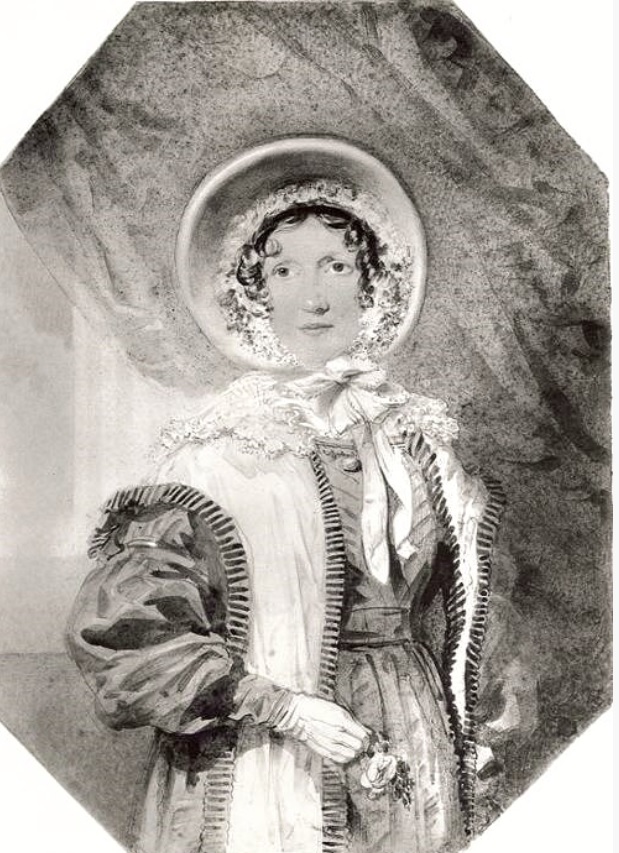
Rann Kennedy (2)


Rann grew up living with Kennedy relatives after his mother Damaris died.  Amongst them was George Kennedy who had built up a reputation as a surgeon in Birmingham.  George worked at the Hospital until late in life. The name George Kennedy is also constantly found in records of commercial transactions from this period in connection with the ownership of inns in the Lichfield and Birmingham area - this is because there was another George Kennedy from the Lichfield line, who was in the Brewing trade.  They were cousins.  Also in these papers many members of the ubiquitous Rann family are to be found.  George the surgeon acquired a handsome property in Acocks Green called Fox Hollies,  very close to the village of Yardley that had been the home of his Dolphin ancestors since the Middle Ages.  George was clearly not only a man of medical accomplishments,  he also had a keen sense of family history.

Above - a contemporary painting of Fox Hollies House (by permission of Will Kennedy)

Rann Kennedy was curate of St Pauls in the centre of Birmingham from the early 1790s.  The congregation bought him the living and he became vicar,  from the late 1790s until close to his death in 1851.  St Pauls is a grand and very elegant Georgian church in what is known as the Jewellery Quarter.  Among pew holders at St Pauls at the time were Matthew Boulton,  the industrial pioneer,  owner of the huge factory at Soho  and his partner in the development of steam engines,  James Watt. Watt lived next door to Fox Hollies House.

Rann’s position both at St Pauls and as usher at the King Edward VI school put him very much at the heart of the Church of England establishment of Birmingham.  Birmingham at this time was a city sharply divided on sectarian lines.  Dissent there dated from the Civil War when it was a stronghold of the Parliamentarian side.  In the years after the French Revolution the town’s resident ‘Church and King’ mob terrorised the many nonconformists and free thinkers.  They attacked the house of Joseph Priestley, the famous Unitarian, scientist and philosopher, one of the leading lights of the Lunar Society,  pulling it down and leading him to flee to America.  The Birmingham mob also destroyed Moseley Hall outside the town on hearing that a dinner had been lately held there in honour of the Jacobins.  The permanent occupant was an old and genteel lady with no political connections whatever and the owner of the property certainly had no knowledge of the infamous dinner.  The mob allowed the old lady to leave then literally pulled the place apart.  They also attacked dissenter places of worship such as Quaker Meeting Houses.  In the 1820s the pupils of the King Edward School would clash in the streets with dissenter apprentices.  Rann was certainly a strong monarchist,  as were many of his generation who were horrified by the excesses of the French Revolution.

It was a common thing for poetic clergymen to compose poetry but not to publish their work,  to publish was widely regarded as vulgar.  Luckily several of the works were published during and after his lifetime.  Rann’s poems were highly regarded by literary circles but especially amongst the “Church and King” sections of the population. His poem upon the succession of George IV was read out to a packed theatre at the time by a prominent actor, one Mr Vandenhoff. 

One of his poems that has survived concerns the death of  Princess Charlotte.  This poem might be viewed as a (heavily) veiled attack on the then King George IV,  previously the Prince Regent, who was held in very low estimation by many Britons.  He had tried to divorce his wife, resulting in a court case which dragged her reputation through the mud and was the cause of much rioting and protest on her behalf.  Her daughter Princess Charlotte was seen as an innocent amongst the scandal-ridden royal family and some radicals used the opportunity of her death to attach yet more ignominy to the King.

One letter to him that is held by the family is from Samuel Coleridge,  his old friend from University, and is a lengthy critical appreciation of this poem. 

Washington Irving,  the American author best known for writing ‘The Legend of Sleepy Hollow’ was a great ambassador of American letters to Britain and Europe.  He visited the Kennedys and became a great friend of Rann and Julia,  finding the rector of St Pauls a lovable eccentric.  Rann would regale his circle of friends with his works which he kept in his head.  Irving was also particularly amused by the educationalist, clergyman, Greek Scholar and academic Samuel Parr, who in his later years was a frequent visitor to the Kennedy household. 

Parr was the rector of Hatton,  on the road between Warwick and Birmingham.  He was a cantankerous man who had purposefully modelled himself, as a raconteur, on Doctor Johnson,  though some have said without the authority or humour of that distinguished Lichfieldian. He had met and spent time with Johnson and had managed to parry the inevitable barbs that the old Tory launched in his direction.  He wrote the epitaph on Johnson’s tomb – in fact he did so for Fox,  Gibbon and many others of the distinguished departed.  He was a diehard Whig and had corresponded, or conversed with all of the Whig politicians and thinkers of his era.  He liked to be known as a very particular gourmand,  and he would make fearful demands at dinnertime, much to the fury of Julia Kennedy,  according to Washington Irving.  One project of Parr’s was to preserve a well from which Richard III was believed to have refreshed himself before the Battle of Bosworth.  This was done after much negotiation with local farmers and  landowners,  though the numbers of subsequent visitors to Dick’s Well was not recorded.

Parr was a radical throughout his life.  In the 1780s he was an enthusiastic fund raiser for Charles James Fox.  In the 1820s he was an associate of the Unitarian Joseph Parkes who campaigned for democracy during the repressive period after the Napoleonic wars.  Parkes was hardly the sort of figure that radicals would have pictured in company with Rann Kennedy but nonetheless they shared a very good friend in Parr.

One of their shared interests was education.  Parr had at one time been fancied to take the headmastership of Harrow and the boys there had rioted when he was not awarded the position by the governors.  He went along to talk the boys out of their protest.  This is interesting because he was noted as a strong proponent of corporal punishment in schools.  He was a frequent visitor to Shrewsbury School whilst Rann’s eldest son Benjamin Hall Kennedy was a pupil there, and often attended at prize givings. When Parr died on March 5th 1825,  Rann officiated at the funeral which was in Birmingham.


Meanwhile King Edward’s School had become the centre of controversy.  The headmaster Reverend J Cooke MA was a ferocious disciplinarian and the physical punishments were such that even in those birch-happy times parents began to complain.  The complaints received short shrift from the head.  Rann was one of the principal staff members in charge of meting out punishments.  To be fair physical violence was common in the schools of the period,  much of it dealt out by the boys themselves who were frequently fighting each other – sometimes in class -  or scrapping with locals outside the school walls.  The policy of the King Edward’s School as elsewhere was generally to condone fist fighting amongst the pupils as long as it was a ‘fair fight’.

Education had changed little in the King Edward VI School since the days of Queen Elizabeth when the first post-Catholic education system was put in place.  Classes in the school at the time of Rann Kennedy involved the pupils gathering around an outer railing and listening to the teacher,  usually lecturing on Latin or Greek.  There was some mathematical teaching  but little of any other subject.  French was discontinued on grounds of patriotism.  Classical learning was believed to contribute to building a sound character in a boy,  though the ex-pupils seem to have found Latin and Greek of little direct use in their subsequent careers.  The fact that so many educated men in Victorian England shared a background in these studies led to a profound bond between many of them,  able to converse in their ancient tongues.  The influence of the Classics pervaded the nineteenth century in many very subtle ways and stood for a lot.  In the mid-twentieth century a Kennedy son was asked something in Latin by his great uncle,  and when he was unable to answer the great uncle was mystified that a Kennedy boy was not a classics scholar.

Radicals in the town are said by some writers to have reviled Cooke and Kennedy for their repressive regime.  However when he retired,  he was honoured by the townspeople so it is clearl not everyone felt that way.  Also Kennedy was a prominent supporter of  the campaign for equal rights for Roman Catholics in Birmingham in the 1830s,  so in this respect he was ahead even of the future great reformer Gladstone who at that time was resisting those changes in Parliament.

King Edwards School by Rann’s time had fallen into a dilapidated state. The grant to maintain it was limited by statute,  and therefore it needed to amended by Act of Parliament.  The governors moved for a bill in Parliament to rebuild the school.  Naturally they wanted it to be a Church of England school as before,  with them in control.  The dissenting community of Birmingham protested loudly and used their growing influence in Parliament to try and kill the bill.  The school was in a desperate state - for example a large hole had appeared in Rann’s kitchen floor.

Eventually the bill was ushered through parliament with the Established Churchmen maintaining their grip on the rebuilt school.  The period of this bill was the culmination of conflict between the Dissenting communities of Birmingham and the adherents of the Church of England.  At times this conflict manifested itself yet again in open violence on the streets,  some of it involving pupils of King Edwards School alleged by some to be orchestrated among the staff. 

Rann retired from the school soon afterwards,  upon the retirement of Reverend Cooke.  He was too old to succeed Cooke by this time.  Though late in life, Reverend Rann continued to be the rector of St Paul’s Chapel. In the last years of his life he collaborated on some latin translations with the son to whom he was particularly close, Charles Rann Kennedy, who had become a barrister.  The old scholar was still as sharp as ever.  He also finally published some of his own poetry.

Rann Kennedy as a man represented many different and seemingly conflicting things to many people during his life.  To some this poses to the biographer an impossibility.  How can a man be a puzzling eccentric, a profoundly spiritual figure,  friend to a radical,  a devout royalist, a poet,  married to the worlds of theatre and art,  a great teacher, loving father, brutal disciplinarian  and accessory to municipal despotism?   But the fact is that he was all these things and more.  As we glimpse Rann Kennedy in the few remains he left behind,  and in the eyes of others,  his life demonstrates the futility of attempting to summarise a life in a few sentences.

More on Rann here

The Rann Family of Birmingham (2)

This page continues from here
By the mid-Eighteenth Century, Ranns owned many brewing and innkeeping establishments – a lucrative business to be in at a time when the Coaching Era was at its height.  Another of Thomas Kennedy’s sons (see my post on him on this blog), George Kennedy, who is noted in local records as Maltster – and elsewhere as surgeon - at the end of the 1700s, is documented as buying brewing and innkeeping properties in Birmingham together with numbers of Ranns.  It can be argued from this evidence that there is a general family alliance between the Kennedy and Rann families – and families operated very much in this way,  doing business as a collective.  What is also becoming evident in this picture is the happy coexistence of the Established Church and the Innkeeping and Brewing Industry.  Lichfield was noted for its ale which was considered to be both very strong and of excellent flavour by such as James Boswell, as has already been noted.

Revd. John Rann is a mystery in his own right.  His father Joseph was from Birmingham.   John grew up during the controversial reign of William III and matriculated at Trinity College Oxford in 1703 aged 17, in Queen Anne’s reign, at a time when it was a hotbed of old Toryism.  Five years later he received his Bachelor of Arts degree.  Oxford was commonly believed to be a nest of Jacobitism,  as indeed was the Church of England in general.  Most aristocratic English Jacobites had no serious intentions of taking up arms against the ruling Royal House.  They would simply grumble amongst themselves about the Whig government and dissipate their energies hunting,  shooting and drinking.  Rann was no aristocrat. The Ranns were tradespeople so he would have felt the scorn of the sons of the upper classes whilst at University.


Portrait believed to be of John Rann


Early in his career, John Rann testified in 1710 against an incumbent of the position of Headmaster of the King Edward VI School in Birmingham who was perceived in the town as being an extreme Whig.  The headmaster in question was said to have stated that Cromwell was right to execute King Charles,  among other inflammatory statements.  He was joined at this tribunal by Joseph Rann who appears to be recognised as a kinsman – and was certainly familiar to the young clergyman.  Thus the Ranns were shown by this time as Tories,  having some years before been in the vanguard of Parliamentarianism.  The evidence is that this was true of most of the inhabitants of Birmingham.  The Ranns all testified to have attended the Birmingham School,  though Joseph Rann said he had moved his son to Lichfield Grammar School in protest at his son’s excessive workload.

There were plenty of Tories, indeed many correspondents with the Jacobite Court, among the Establishment at this time.  A contemporary of John Rann’s at Oxford was Lord Mansfield,  a famous QC who later became Lord Chancellor.  He was of the Murrays of Scone, a family elevated to nobility by James I and VI.  Lord Mansfield went so far as to visit Paris and convey his respects to the Chevalier De St George,  but ultimately the pursuit of career and prosperity took him on the high road to the woolsack,  unlike his brother who had joined the intriguers,  adventurers and diehards at the Stuart cabinet in exile at St Germain in France.  The Duke of Marlborough himself kept in regular contact with St Germain, just in case.  According to Owen’s History of Shrewsbury, written in 1800, all the squires in Shropshire were Jacobite,  and Mary Alden Hopkins in her book ‘Doctor Johnson’s Lichfield’ holds that the gentry in the region of Lichfield were similarly inclined (though she actually refers to them as ‘Jacobins’ - the term given to French revolutionaries from forty years later!)

The purpose of the great universities of the period was chiefly to produce clergy for the Church of England.  Oxford and Cambridge controlled huge numbers of the ‘livings’ (as positions in parishes were known) and the staff held ecclesiastical offices which meant that they must remain celibate – a situation directly inherited from the old Roman Catholic ideal of priesthood.  Few lectures were delivered at the universities and  little learning was acquired from these grandees.  If the students chose to spend their time reading then it was a matter of personal choice.  What mattered was that a student acquired social connections which would increase the numbers of livings and therefore his future prosperity.  The students mostly spent their time in drinking, gambling and loose living.  This had been the situation for centuries and few saw any reason for a change.

Whatever his feelings towards learning or the Chevalier,  Reverend John Rann successfully pursued his career in the Church,  acquiring multiple livings in the Black Country.  He is said by different sources to be Vicar of several parishes in the West Midlands,  apart from Rushall and Coldmore in Walsall,  West Bromwich, Wolverhampton and is also mentioned in connection with Wednesbury.  The more careerist churchmen collected livings through the patronage of local lords, and often amassed large salaries as a result. However John Rann was not always the canniest of operators.

He was appointed incumbent of West Bromwich in 1710 but left in 1743 after a lengthy but “unsatisfactory and troubled ministry”. It was in that year that as vicar of All Saints Church West Bromwich John Rann, when apparently very drunk, rode his horse through an open air meeting being addressed by John Wesley (who was also an Oxford man) using "unseemly words".  By doing this he seems to have alienated the Earl.  This did not affect his other livings,  the patrons of whom seem to have approved of his raid on Wesley.  He continued to officiate at Rushall where the church accounts of 1732 bear his signature,  and a letter in the possession of the family shows he was there in 1770.  The tithes of Walsall were in the gift of the Dolphin family of Shenstone.

The living of West Bromwich was in the gift of the Earl of Dartmouth,  whose grand family seat was  near Birmingham. The Earl who appointed Rann to West Bromwich was the son of the notorious Jacobite George Legge.  He had commanded the regiment that escorted The Duke of Monmouth to his fateful meeting with James II after the failed Rebellion that bore the name of that illegitimate son of Charles II.  Legge commanded the Navy under James and had been high in the Senior Service,  and close associate of Samuel Pepys the diarist, during the reign of Charles II when James had commanded the Navy.  Dartmouth had refused to conduct the heir to France on principle,  when the crown was already starting to slip from the Stuart King.  However he was removed as head of the Navy when William of Orange took the throne.  He used his influence in the Navy to conspire on behalf of his former Jacobites,  one of the most highly-placed Jacobite sympathisers of all.  He paid for this by being clapped in the Tower when one of those plots fell apart,  and there he died,  still protesting his utter hatred of Frenchmen.   The Earl who succeeded him was exiled from political life by William of Orange but upon the death of the Dutchman became a faithful servant to Queen Anne’s governments.  He retired when George I succeeded the last of the Stuart monarchs.  He was not the Jacobite stalwart that his father was,  but he was certainly a Tory and showed no love of the House of  Hanover.

The future 2nd Earl of Dartmouth,  Viscount Lewisham, Baron Dartmouth of Dartmouth, William Legge  (1731 – 1801) was growing up at the time when John Rann was chaplain to the Earl.  The 2nd Earl was to become sometime First Lord of Trade,  Lord Privy Seal (or Minister Without Portfolio),  Lord Steward and crucially Colonial Secretary during the period 1772-1776. The Earl was also stepbrother of Lord North,  the British Prime Minister during the Revolutionary War period,  who acceded to the post in 1770.  Dartmouth was appointed to the government because of his family relationship to North, though Dartmouth was a supporter of Rockingham – whom North detested.  ‘Brother’ Legge was a Methodist,  though he was too young to have been behind Rann’s swift departure from the living of West Bromwich after the incident with Wesley.  Rann was evidently a man with wide political connections some of which he probably cultivated whilst he was chaplain to the old Earl – particularly Lord North, whom he would have known during his lordship’s childhood and formative years.

The Reverend John Rann himself made a most distinguished marriage with Damaris also known as Mary, the beautiful dark-haired daughter of John Dolphin of the elegant Moss Manor,  in  Shenstone,  which still lies on the road between Lichfield and Walsall.  Shenstone was favoured as a coaching halt because it allowed coaches on the Watling Street route to bypass the narrower and somewhat tortuous roads in and out of Lichfield.  The Dolphin family had inherited Moss Manor from a branch of the Stanley family at the beginning of the 1600s.  The Dolphin family had been based in Yardley apparently as long as it had existed - it is  now swallowed up by Birmingham but back then it was a village in open countryside. They had been noted landowners and cattle farmers in that area since Norman times.  When Reverend John Rann died at a great age he was commemorated in marble along with his wife among the Dolphin Family memorials in the Parish Church in Rushall.  The name Dolphin was adopted during the 1400s – Stebbing Shaw says that previously they had the name of Swanshurst – also the name of the house in Birmingham that remained in the family until the 1800s.  The Swanshursts were involved in a legal controversy with local villeins during the 1200s when he had attempted to enclose some land up to that time regarded as commons.  Their feudal overlords were the Earls of Warwick.  The existence to this day among the possessions of some of the Kennedy family of some elegant and opulent portraits of these 17-18th century Dolphins testifies to their wealth and power.

Around 1745 when he was rector of West Bromwich, one of John Rann’s several daughters fell for a young man who claimed to be the heir of a very rich man in another town. She gave him her gold watch. Rann was reluctant to upset the father so he went along with it. However his son-in-law, an attorney, investigated and at length found that the suitor was actually a tailor's son who looked very like the heir who had just died of smallpox. They intercepted a letter the young man had asked to be posted which had details of his plot in it, whereby he was planning to help himself to her dowry then scarper. The trickster was marched off to gaol but the Rann's daughter never got her watch back. The whole tale was related in a love letter from a man in Wolverhampton to his intended in Leek. The story was widespread in the tea rooms of the Black Country at that time according to the narrator.  No doubt the embarrassment of the Parson was equalled by fury that he was the subject of gossip for miles around.


John Rann had other children,  one of whom,  Joseph, went on to be Vicar of Coventry,  and who wrote a six volume edition, with commentary, of William Shakespeare’s works.  Clearly John Rann was able to pass on a love of literature and drama to his family though some critics have accused Joseph of unimaginativeness in his commentary.

One daughter of John Rann named Mary – possibly the one duped by the tailors son - went on to marry an attorney at law from near Shrewsbury named Illedge Maddox of whom more here.

The Rann Family of Birmingham


A few miles away in the small town of Birmingham, a very different story unfolded during the Civil War.  The community there was predominantly made up of leather workers and tanners,  self-reliant artisans who instinctively gravitated towards the puritanism that had come to dominate the Capital and Parliament.  The followers of the King tended to be (although were by no means exclusively) traditionalists from the countryside,  the agricultural workers of a big landowner who could call upon their feudal services.  The people in the towns and cities had no feudal lord to tip their hat to and thus tended to mobilise around the urban churches which had become influenced by incomers from the continent,  often hardline Protestant refugees from Catholic France.  The French protestants were largely Calvinists,  an uncompromising community which was in no mood to meekly bow the knee to an English King that had married a devout Catholic Frenchwoman of the ruling French Royal House - their great tormentors.  These people moved to the heart of the new communities of manufacturers such as weavers and other like trades and must have been a great influence on the English townspeople around them.  The English had always had a reputation in Europe for loose living and debauchery,  but these influences even converted the notoriously immoral population of London to presbyterianism.  Shortly before the outbreak of the Civil War, the Scots Covenanter Army marched south in protest at the ‘papist’ actions of the King the London crowds unbelievably turned out onto the streets in their thousands to cheer them as heroes and liberators.

Birmingham like London, opposed the King,  and so it was that Prince Rupert, Charles I’s nephew and flambuoyant cavalry leader, and his army rode towards the town intent on preventing further depradations on the Royalist Army from that locality.  The people of Birmingham had seized goods and even soldiers of the Royal Army, sending them to the city of Coventry where they were free to roam within the walls but were ignored as enemy prisoners (thereby giving rise to the well-known phrase).  Rupert had just besieged and captured the Cathedral Close of Lichfield and converted it into a Royalist citadel.  As he approached he was confronted by hastily-constructed defences in the form of mud walls that surrounded the fifteen or so streets.

There was desultory resistance from defenders which was soon put to flight,  leaving the local population to face a rampaging army,  some of whom were mercenaries with little interest in the well-being of those left behind.  The reports of what happened next are contradictory.  Rupert claimed that he restrained his army from going further than some limited reprisals.  The stories of local people contradict this. 

The Rann family had featured in the parish registers of Birmingham’s St Martin’s Church at least since the late 1500s – one William Rande marrying Elizabeth Rastell on November 6th 1574 .  There are earlier records of Ranns – for example the late 14th century Rydeware Chartulary (in Latin) mentions one Hercelyno De Rande.  Humphrey Rann clearly was a man of some note in the community to be mentioned by name in this account - which mentions few other  names.  In his will of 1646 his profession is given as baker – he owned a shop in the Shambles.  The streets of Birmingham of those days were said to be lined with leather hides being hung out and stretched.  The centre of the town was graced by a large Leather Hall,  for the use of the trade.  It had also long been a place where metalworking was practised.  Upon the Restoration,  when suddenly anti-Royalists became extremely rare creatures indeed,  Birmingham started to become the centre for making buttons,  buckles, and other light goods.  Such goods were easy to transport and catered for the moneyed classes who took a renewed interest in elegant fashions after the manner of their gay monarch.  One Joseph Rann was to become Sheriff of Birmingham during the late years of the century when the town had become very much larger and when William III had taken the throne – another European import most welcome to the burghers of Birmingham.  The Sheriff and town bailiffs were the elected chief officials of the Corporation. The parish records show that Joseph Rann had a son, John Rann in 1687.  Young John Rann was to go on to live a very long life and play a major part in our story (see here)